
How to Improve Posture Naturally at Home:
Simple Habits and Exercises
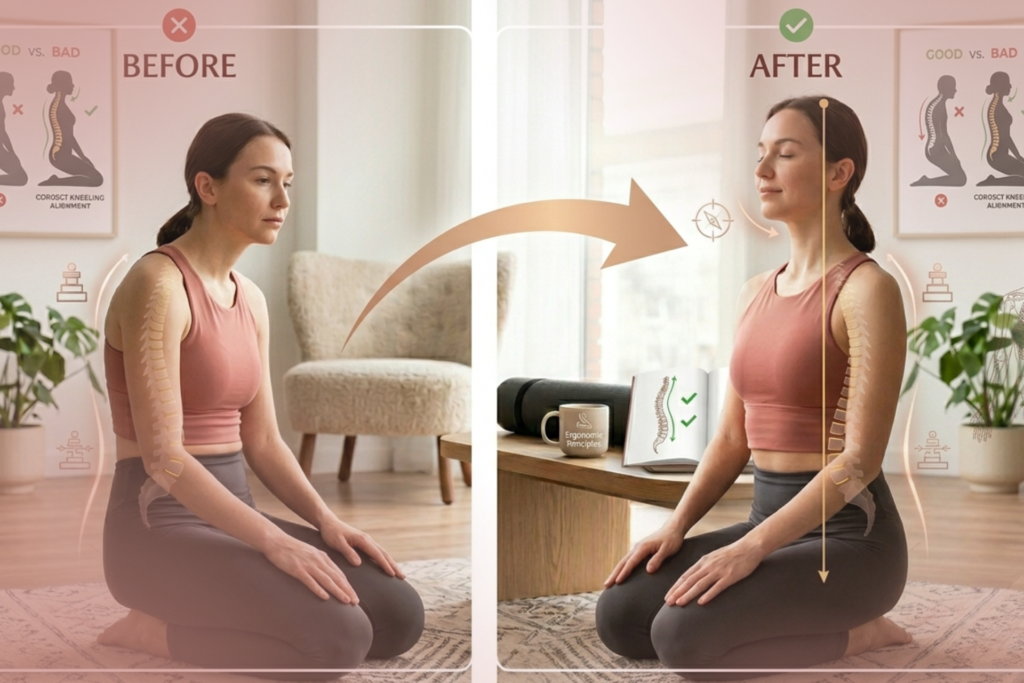
We live in a world full of screens and convenience, where movement is often replaced by long hours of sitting. As a result, how to improve posture has become a question many people are actively searching for.
Think about how many times you’ve caught yourself slouching over your phone or sitting for hours with your shoulders rounded forward. If that sounds familiar, you’re not alone!
Poor posture has quietly become part of everyday life, especially with modern habits like long work hours, constant screen time, and very little daily movement.
The good news? You don’t need expensive tools or complicated routines to fix it. In this article, I’ll walk you through a few simple habits and effective exercises that can help you improve your posture naturally at home and start feeling the difference in your body, energy, and even confidence.
Common Causes of Poor Posture
Before we start talking about fixing posture, why it matters, and the exercises you can do at home, it is helpful to understand what’s causing the problem. After all, understanding the issue is often half of the solution.
To be honest, there are many reasons why posture becomes weak over time. Covering all of them would require an entire e-book. To keep things simple and practical, let’s focus on some of the most common causes.
Sitting for long periods:
Many people spend hours leaning toward their laptop, desktop keyboard, or notebook without realizing it. Even if you’re a stay-at-home mom watching TV while keeping an eye on your toddler, your body often falls into the same pattern: rounded shoulders and a curved upper back.
Over time, this position places constant stress on your upper back, neck, and shoulders.
Weak core and back muscles:
Your core muscles are the 360-degree group of muscles surrounding your midsection. They play a crucial role in protecting your spine and maintaining proper posture.
When these muscles are weak, your body struggles to support proper alignment. This can lead to noticeable imbalances, such as the hips tilting forward or backward, which directly affects posture.
Constant phone use:
This is one of the most common modern causes of poor posture. Smartphones have become a major part of daily life, and most people spend hours texting, scrolling through social media, or browsing the internet.
The problem is that we rarely notice how we look from the side while using our phones. Our head drops forward, the chest collapses, and the shoulders round inward. Over time, this position puts significant strain on the neck, chest, and upper back.
The illustration below gives you an idea of how this posture can affect your body.

Why Good Posture Is Important
You might think good posture is simply about standing tall so people can notice your height or your silhouette. In reality, posture goes far beyond appearance; it affects how your entire body functions.
When your posture improves, you may start noticing several positive changes.
Less tension in your neck and shoulders:
Maintaining proper posture, such as keeping a neutral spine, your shoulders relaxed and slightly back, and your ears aligned with your shoulders, helps reduce unnecessary strain on the neck and shoulder muscles.
When posture is poor, these muscles are forced to work harder to support the weight of your head. Over time, this leads to tension, discomfort, and muscle fatigue.
Better spinal alignment and reduced back pain:
Good posture helps maintain the natural curves of your spine. This allows your body weight to be distributed more evenly across muscles, ligaments, and spinal discs.
When the spine is properly aligned, there is less stress on the lower back and surrounding structures, which can help prevent or reduce back pain.
Easier, deeper breathing:
Posture and breathing are closely connected. When you sit or stand upright, your rib cage and diaphragm are properly aligned, allowing your lungs to expand more efficiently.
Slouching, on the other hand, compresses the chest and abdomen. This limits diaphragm movement and often leads to shallow, rapid breathing.
When your posture improves, breathing becomes deeper and more efficient, which can help increase oxygen intake, reduce stress, and support better energy levels throughout the day.
A natural boost in confidence:
It may be surprising, but good posture can have a direct impact on how you feel about yourself. Standing and sitting upright is associated with increased confidence, lower stress levels, and a greater sense of control.
Your posture also acts as a nonverbal signal. When you maintain an upright, open position, it can communicate confidence and competence to others.
Simply put, good posture allows your body to support you instead of working against you.
Simple Daily Habits to Improve Posture at Home
Improving posture does not start with complicated workouts or strict routines. It usually begins with small, consistent changes in the way you sit, stand, and move throughout the day.
Here are a few simple habits that can make a real difference.
1. Fix Your Sitting Position
Most posture problems begin while sitting. Many of us spend hours leaning forward without even noticing it.
- Keep your feet flat on the ground
- Sit tall with your back supported
- Avoid crossing your legs for long periods
When you sit properly, your spine stays closer to its natural alignment.
2. Adjust Your Screen Height
If your screen is too low, your head automatically drops forward.
- Your screen should be at eye level
- Avoid looking down at your phone for long periods
A small adjustment in screen height can prevent hours of neck strain.
3. Take Movement Breaks
Even perfect posture becomes uncomfortable if you stay in the same position for too long.
- Stand up every 30 to 60 minutes
- Stretch or walk around, even for a minute
These short breaks allow your muscles to reset and reduce stiffness.
4. Stay Aware of Your Posture
Many people simply forget to check their posture during the day.
Try doing quick posture checks:
- Shoulders relaxed and slightly back
- Chest open
- Chin neutral
The more you practice this awareness, the more natural good posture becomes.
5. Improve Your Sleeping Position
Posture does not only matter during the day. Your sleeping position also affects spinal alignment.
- Use a supportive pillow
- Keep your spine in a neutral position
Good sleep posture helps your muscles recover and reduces morning stiffness.
These small habits may seem simple, but they add up more than you might expect.
Best Exercises to Improve Posture Naturally
You do not need a full workout routine to improve posture. A few effective movements, done consistently, can strengthen the muscles that support proper alignment.
A. Stretching Exercises
Stretching helps release tight muscles that pull the body forward.
Chest Opener Stretch
Opens tight chest muscles that develop from long hours of sitting.
Neck Stretch
Relieves neck tension and helps restore proper head alignment.
Hip Flexor Stretch
Helps counteract the tightness caused by prolonged sitting.
B. Strengthening Exercises
Strengthening exercises support the muscles responsible for keeping your body upright.
Plank
Strengthens the core and improves overall stability.
Glute Bridges
Activates the glutes and supports the lower back.
Superman Hold
Strengthens the muscles along the entire back of the body.
C. Mobility and Alignment Movements
Mobility exercises improve movement quality and posture awareness.
Cat Cow Stretch
Encourages spinal mobility and reduces stiffness.
Wall Posture Check
Helps you feel what proper alignment should look like.
Shoulder Blade Squeezes
Encourages engagement of the upper back muscles.
Creating a Simple Posture Routine
You do not need long workouts. Consistency matters more than duration.
Here is a simple 5 to 10 minute routine you can follow at home:
- Chest stretch – 30 seconds
- Neck stretch – 30 seconds each side
- Cat cow – 1 minute
- Plank – 30 seconds
- Glute bridges – 10 to 12 reps
- Shoulder blade squeezes – 10 reps
Repeat this routine daily, or at least four to five times per week.
Keeping the routine simple makes it easier to stay consistent.
Additional Tips for Long Term Posture Improvement
- Stay active throughout the day. Even light walking helps.
- Strength train regularly to support posture muscles.
- Set up an ergonomic workspace at home.
- Be patient. Posture improves gradually with consistent practice.
Conclusion
Improving posture does not require perfection. It requires consistency.
Small habits, simple exercises, and daily awareness can completely change how your body feels and moves. With time, standing taller and sitting straighter will start to feel natural rather than forced.
If you have been feeling stiff, tired, or uncomfortable in your body, this might be the moment to start small. Your posture, and your body, will thank you.